Harnessing the Hyperscale Wave: The Data Center Evaluation Checklist
June 2026
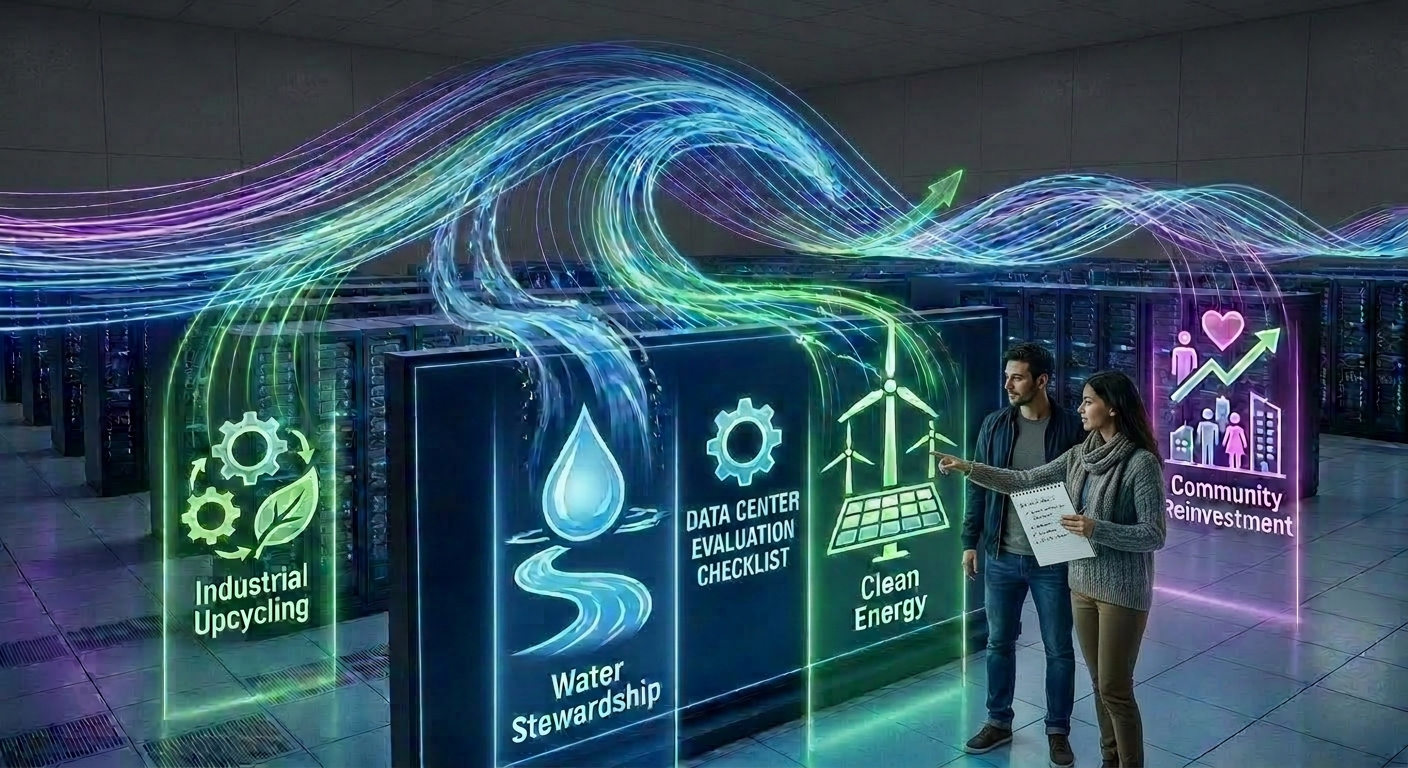
Harnessing the Hyperscale Wave! (Image: AI generated)
A Global Framework for Site Selection and Development
As global demand for digital infrastructure and AI accelerates, data centers are consuming unprecedented amounts of energy, water, and land. To meet our global climate targets, we must fundamentally rethink how these massive facilities are sited, designed, and integrated into communities.
Architecture 2030 announces the release of the Data Center Evaluation Checklist by Edward Mazria — a comprehensive, 8-point framework designed to guide developers, policymakers, and urban planners in creating sustainable, zero-carbon digital infrastructure.
Rather than paving over natural landscapes and straining local grids, this new checklist provides actionable guidelines to ensure data centers act as stabilizing forces for both the environment and the host community.
Key Framework Highlights Include:
- Industrial Upcycling: Prioritizing the redevelopment of aging coal and gas power plants or heavy industrial sites leverages existing infrastructure and bypasses grid interconnection delays. This strategy avoids locking-in existing or new fossil-fuel generation while capitalizing on a massive, untapped inventory: thousands of aging and decommissioned power plants, and large brownfield sites in the U.S., and tens of thousands more worldwide.
- Water Stewardship: Protecting municipal drinking water by sourcing only recycled or industrial wastewater for cooling, alongside rigorous pollution abatement protocols for closed-loop systems.
- Grid Protection & Clean Energy: Mandating 24/7 zero-carbon energy, “battery-first” backup architectures, and legally binding demand-response plans to lower power usage during peak community hours.
- Community Reinvestment: Ensuring the financial savings from upcycling existing sites are shared directly with the host community through local hiring, prevailing wages, and infrastructure upgrades.
Digital growth must not come at the expense of our climate or local ecosystems. We invite policymakers, architects, communities, and tech developers to utilize this checklist to evaluate upcoming proposals and ensure every new data center aligns with a resilient, zero-carbon future.
Architecture 2030’s related articles: