Architecture 2030 at the Sustainable Buildings and Construction Summit
May 2026
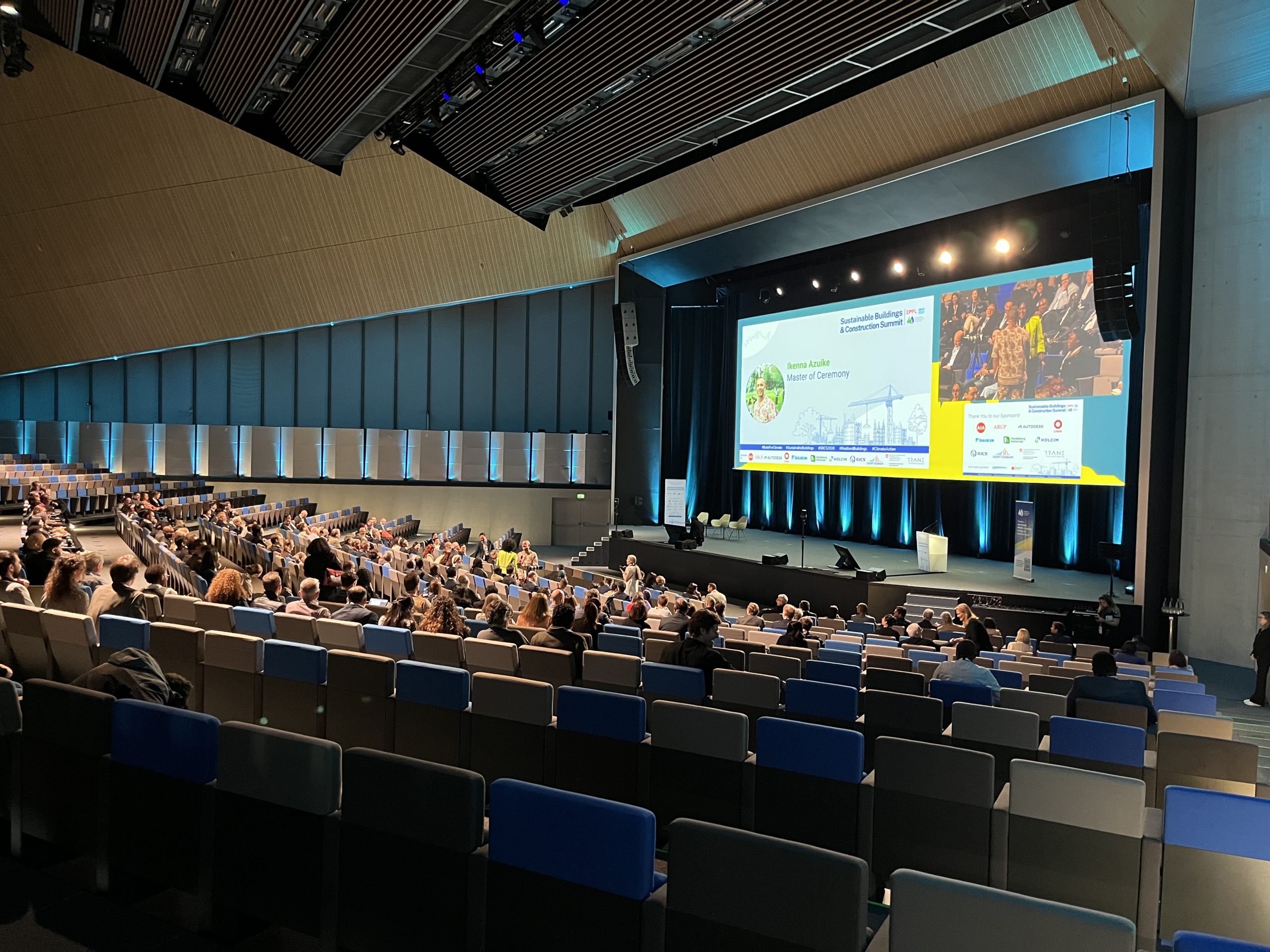
Lausanne, Switzerland · April 20–22, 2026
Over three days in Lausanne, 468 participants from 65 countries gathered for the Sustainable Buildings and Construction Summit — only the second global climate event dedicated entirely to the built environment. Hosted by EPFL, the UN Environment Programme, and the Global Alliance for Buildings and Construction (GlobalABC), the Summit convened international leaders to accelerate the sustainable transformation of buildings and construction.
Working behind the scenes with host EPFL to co-develop that agenda, Architecture 2030 broadened the Summit to more fully represent the issues built environment leaders are addressing — from planetary boundaries, urban planning, and optimal density to culture- and climate-responsive design and nature-based solutions through landscape architecture. Architecture 2030 also co-led the workshop Culture, Heritage, and Social Sustainability: Foundations for a Sustainable Future with the Climate Heritage Network, and joined workshops on existing building refurbishment, infrastructure, and urban planning.
A global delegation
Architecture 2030 brought a diverse delegation of subject matter experts from around the world to the forum.
CEO Vincent Martinez led the delegation and co-hosted a meeting with RMI on System Mapping to Expand and Enhance Global and Regional Engagement and Collaboration. With more than two dozen organizations in attendance, participants identified existing and emerging technical themes — including resilience, whole-life carbon, embodied carbon, material health, culture and social sustainability, and infrastructure — and the new coalitions forming around the world to address them. The meeting launched a longer effort to map the field and strengthen how its organizations coordinate.
Architecture 2030 Board Director Victoria Burrows brought a venture capital lens to scaling climate startups, co-chairing a workshop on “Enabling a Sustainable Built Environment Through Data, Digital Systems, and AI” with RICS and Autodesk, and reporting its findings to the Summit in a plenary session.
Senior Fellow Kelly Alvarez Doran drew on his near-decade of experience working in Rwanda with MASS Design Group, along with his recent urban design guidelines policy work with the City of Toronto.
Senior Fellow and China Lead Jiexin Li took part in a low-carbon cement and concrete event hosted by the Global Industry Hub and the ClimateWorks Foundation, bringing decades of experience leading Architecture 2030 China’s collaborations with the country’s Local Design Institutes, along with his recent work assessing the maturity of embodied carbon and whole-building life cycle assessment literacy in China.
Delegate Rosie Paul co-facilitated the Culture, Heritage, and Social Sustainability workshop, drawing on her firm Masons Ink and its work with heritage materials and its efforts to empower women to upskill as masons in India. Senior Fellow and Climate Heritage Network delegate Lori Ferriss also co-facilitated the workshop, and hosted a project meeting on Advancing Culture and Heritage in the UNFCCC Global Climate Action Agenda, raising awareness of heritage decarbonization solutions and the progress made to weave cultural heritage into UNFCCC frameworks and actions, including COP and the Global Climate Action Agenda.
From agenda-setting to workshop facilitation to coalition-building, Architecture 2030’s presence in Lausanne advanced a sustained commitment: keeping the built environment — in all its technical, cultural, and human dimensions — at the center of global climate action.